

Courageous observations
Innovations in the field of child psychoanalysis
Miranda Gold reviews Arminda Aberastury’s Theory and Technique of Child Analysis, edited by Jill Savege Scharff and Lea Sofer de Setton. Originally published in the TLS, January 2026.
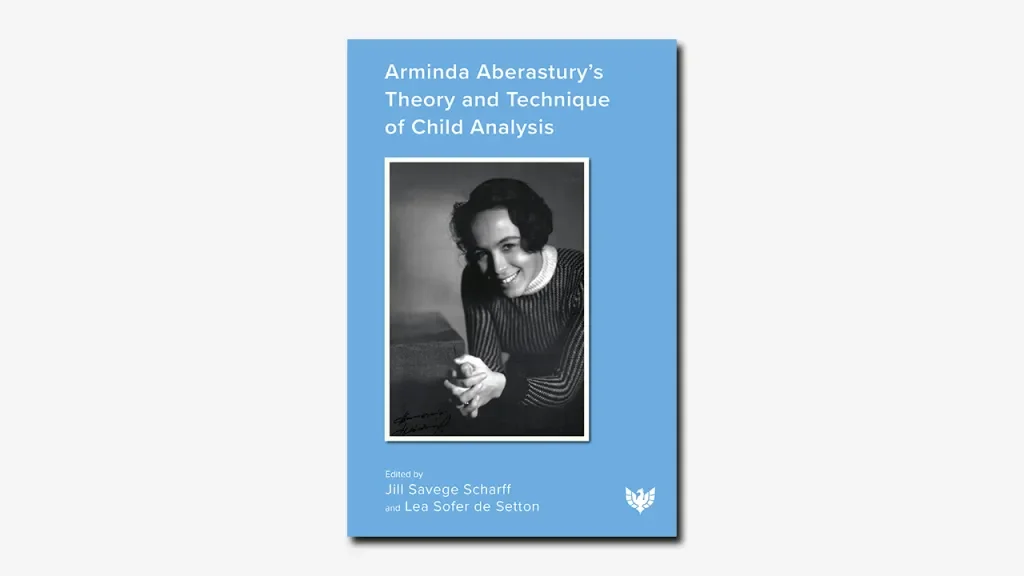
Equal measures of rigour and chance characterize both the evolution of Arminda Aberastury’s theory and this long-overdue translation of her work, which makes her invaluable contribution to the field of child psychoanalysis available in English for the first time. It also offers a beautiful balance to Aberastury’s efforts to build bridges across linguistic and temporal borders, translating and disseminating the work of Melanie Klein, whose “interpretation of [children’s] play following the technique of dream analysis that Freud devised for reaching the unconscious” was a key influence as Aberastury forged her own path.
Though psychoanalytic theory was beginning to permeate intellectual and medical circles in Buenos Aires as early as 1910, the “somatic” approach still dominated psychiatry, and the specialized discipline of child psychoanalysis was only just emerging in Central Europe when Aberastury first applied the teachings of Anna Freud. Trained in pedagogy, Aberastury was an unlikely pioneer of the field – it was in fact in the role of tutor that her courageous observation of a young girl misdiagnosed with oligophrenia (a now outdated term for intellectual disability) paved the way for her own revolutionary approach. Unconvinced that the girl’s learning difficulties were intractable, Aberastury recognized that she was in fact “paralyzed” by distress about her mother’s illness and the disorientation created by misguided, if well-intentioned, attempts to conceal that reality from her. Inspired by the transformative effect of reflecting the girl’s anguish back to her, Aberastury steeped herself in the literature on child analysis, “[laying] the foundations for a practice that provided children’s symptomology with a human dimension”.
Described here as an autodidact, Aberastury was able to assimilate her early influences, including Anna Freud and Sophie Morgenstern, critically engaging with their work through her own perceptive interpretations while still respecting their contributions. The clinical examples vividly recounted in this volume reveal her deep respect for her young patients’ capacity for insight, which, coupled with her own research, grounded her developing theory. This was continuously refined through the practice itself; what took place in the therapy room guided her, particularly where obstacles led to innovation. Aberastury is both a humble inheritor of her predecessors and an independent adventurer, unafraid of questioning traditional paradigms. Boldly, “she modified the scheme of infantile sexuality, already posited by Freud”, and recognized “the importance of dentition in the origin of the early genital stage”. Equally daring was her assertion that even pre-verbal children not…